Florida-Friendly Foodscaping in Marion County
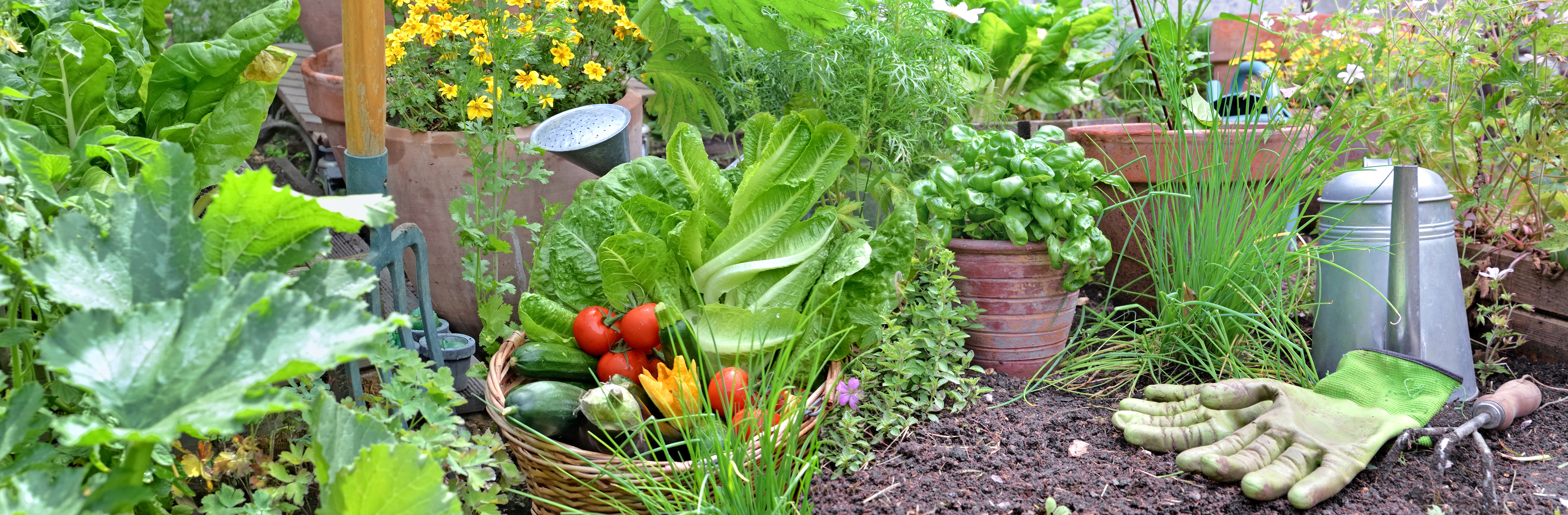
Edible ornamental landscaping, also called foodscaping, is the combination of edible and non-edible ornamental plants to create a landscape that is attractive and nutritious. When installed and managed with the Florida-Friendly Landscaping™ principles, your foodscape can also be a low-maintenance oasis for you and for wildlife that saves water and protects water quality.
Welcome to the McPherson Foodscape
All of the plants you see before you are native or Florida-friendly perennials, meaning they are drought-tolerant and will be productive with little water, fertilizer, or pesticides for years to come once established. Perennial plants typically require less care than annuals. These plants were selected to best suit the cold hardiness zone (9a/9b), soil, moisture, spacing, and sunlight conditions at this site. New landscape beds with small plants may seem sparse at first, but will fill in beautifully if spaced according to their mature size. Intermixing blooming plants, especially natives, will provide habitat for pollinators and increase fruit production. The use of 2-3" of organic mulch, like the pine bark mulch used here, also helps suppress weeds and reduce plant stress. See below for more plant information.
-
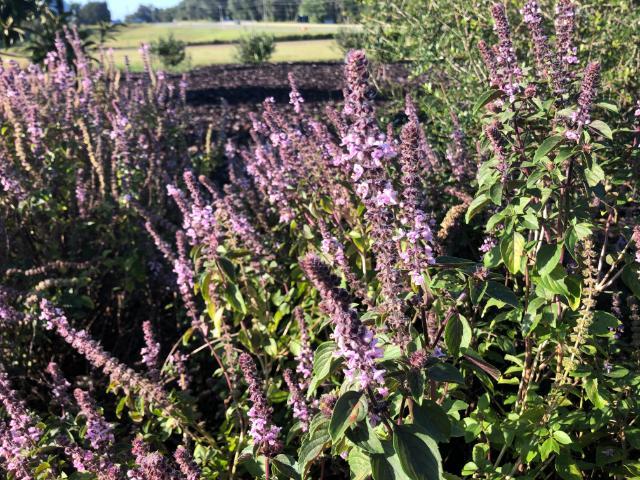
African Blue Basil
Ocimom x hybrid
Non-native, perennial herb. Sterile hybrid so it does not self-seed. Frost-tender but usually returns from the roots after winter. Pruning back dead stems will also reduce woody growth. Purple blooms highly attractive to pollinators. Culinary herb, makes excellent tea. Grows 1-3' tall and wide, needs full sun, well-drained soil.
-
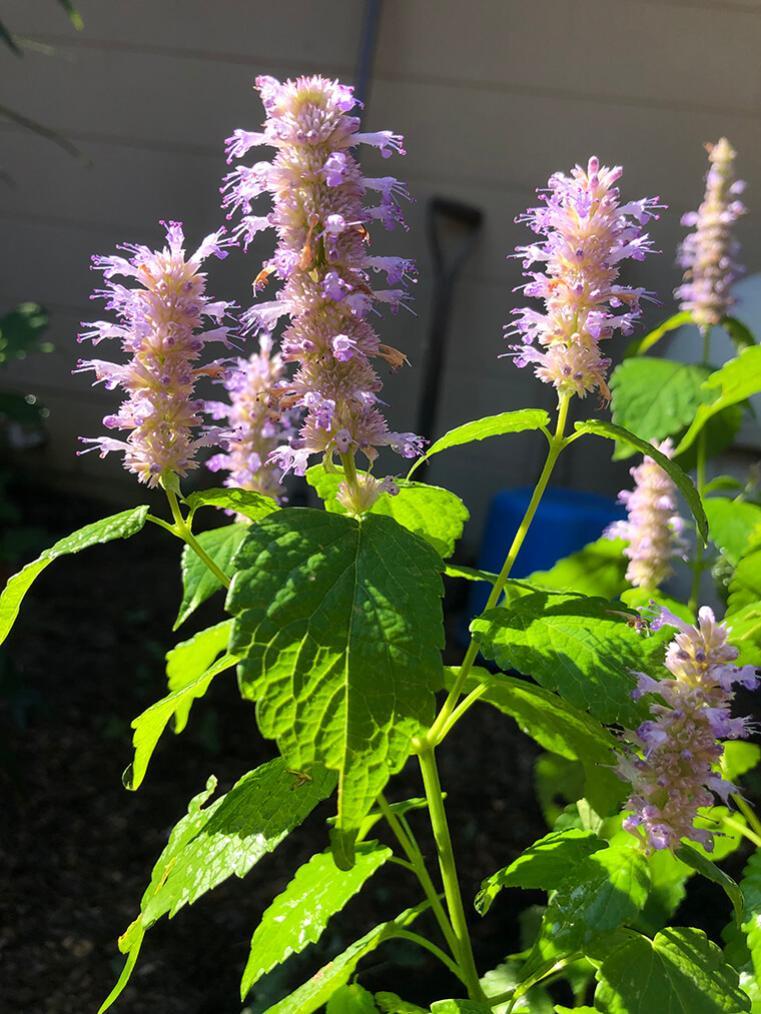
Anise Hyssop
Agastache foeniculum
Perennial, deciduous herb in the mint family. Native to North America. Purple blooms are highly attractive to pollinators. Edible leaves, flowers and stems have a licorice-like flavor. Full to partial sun, well-drained soil. Grows 2-4' tall x 2-3' wide.
-
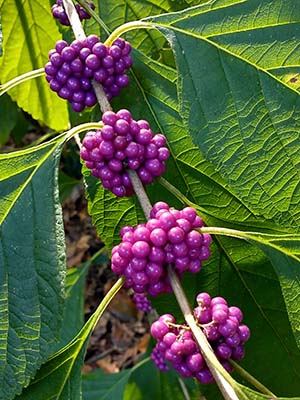
Beautyberry
Callicarpa americana
Native, deciduous shrub. Has clusters of pale pink flowers in spring highly attractive to small pollinators. Royal purple, edible berries in the late summer / early fall desired by birds. Berries can be made into drinks, jams, jellies and baked goods. Can grow up to 8' tall and wide. Tolerates a wide range of soil types, sun to shade.
-
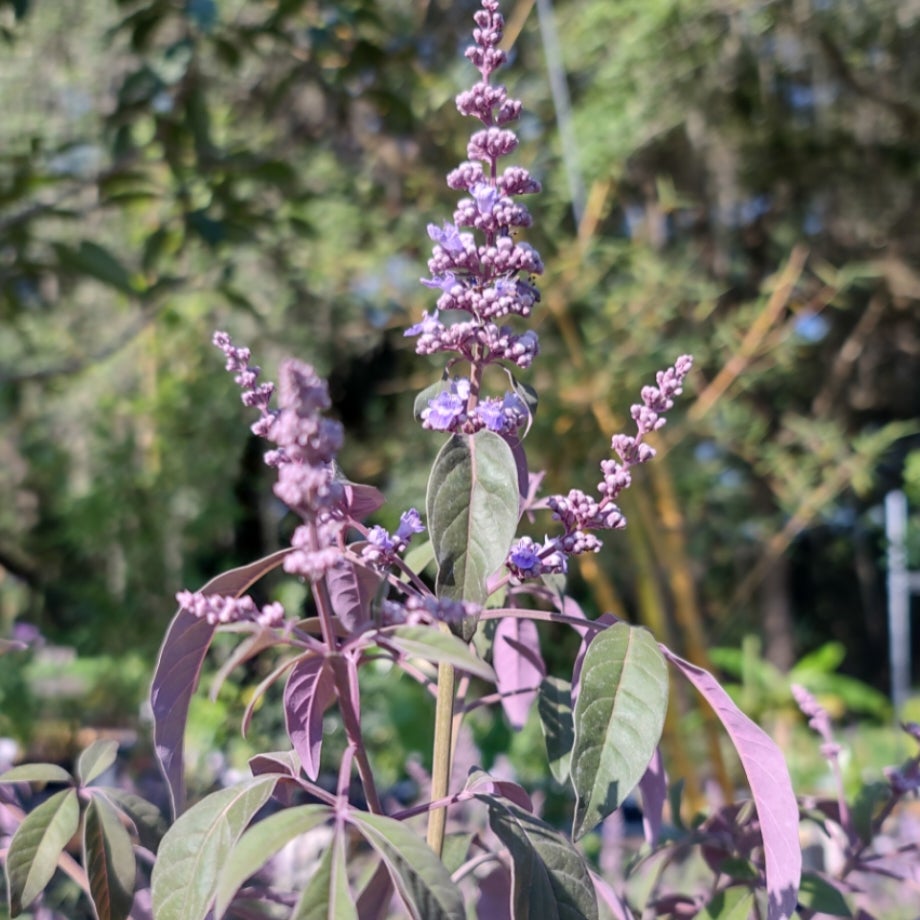
Dwarf Chaste Tree 'Flipside'
Vitex agnus-castus 'Flipside'
Non-native, deciduous, large shrub or small tree. 'Flipside' grows to be ~6-8' tall x 8-10' wide with leaves that have a silvery-purple underside. Purple flowers highly attractive to pollinators. Long ethnobotanical history of this plant being used over the centuries. Full to partial sun, well-drained sites.
Photo credit: Scrubland Farmz Nursery
-
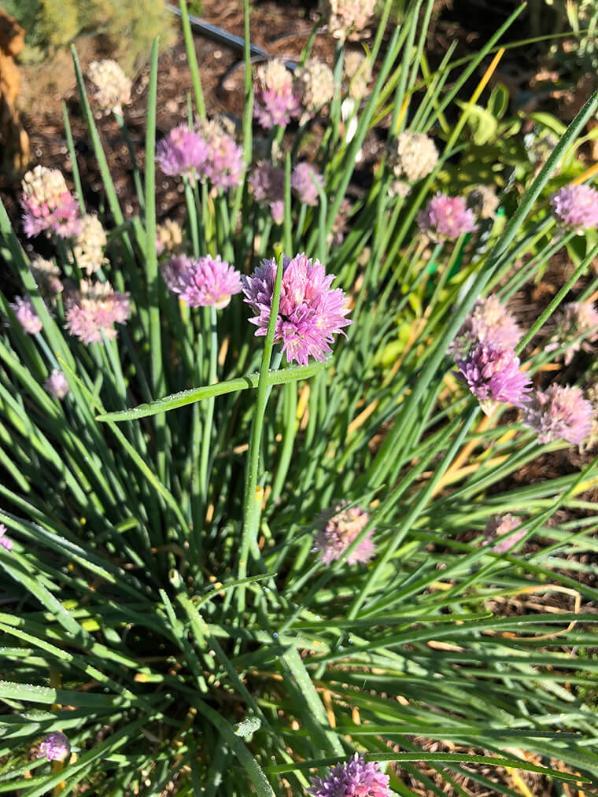
Chives
Allium spp.
Perennial, clumping herbs. All parts of the plant are edible. Purple blooms of onion chives and white blooms of garlic chives are highly attractive to pollinators. Sizes vary but typically 1-2' tall and wide. Plant in full to partial sun in well-drained sites.
-
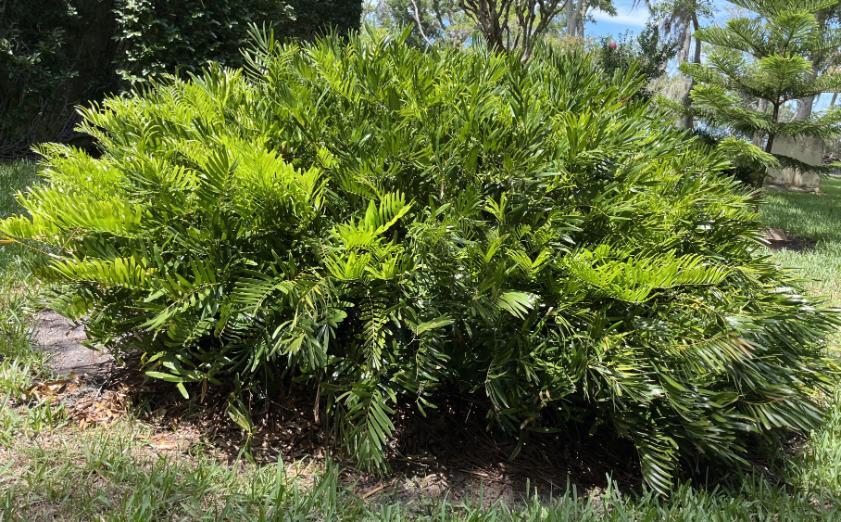
Coontie
Zamia integrifolia
Native, evergreen shrub. Slowly grows up to 3' tall x 5' wide. Tolerates sun or shade. Host plant to the Atala butterfly in S. FL and to echo moths so do expect some seasonal feeding damage. Native American history of its use to make starch but toxic if not done properly. Female plants produce bright orange fruit toxic to dogs.
-
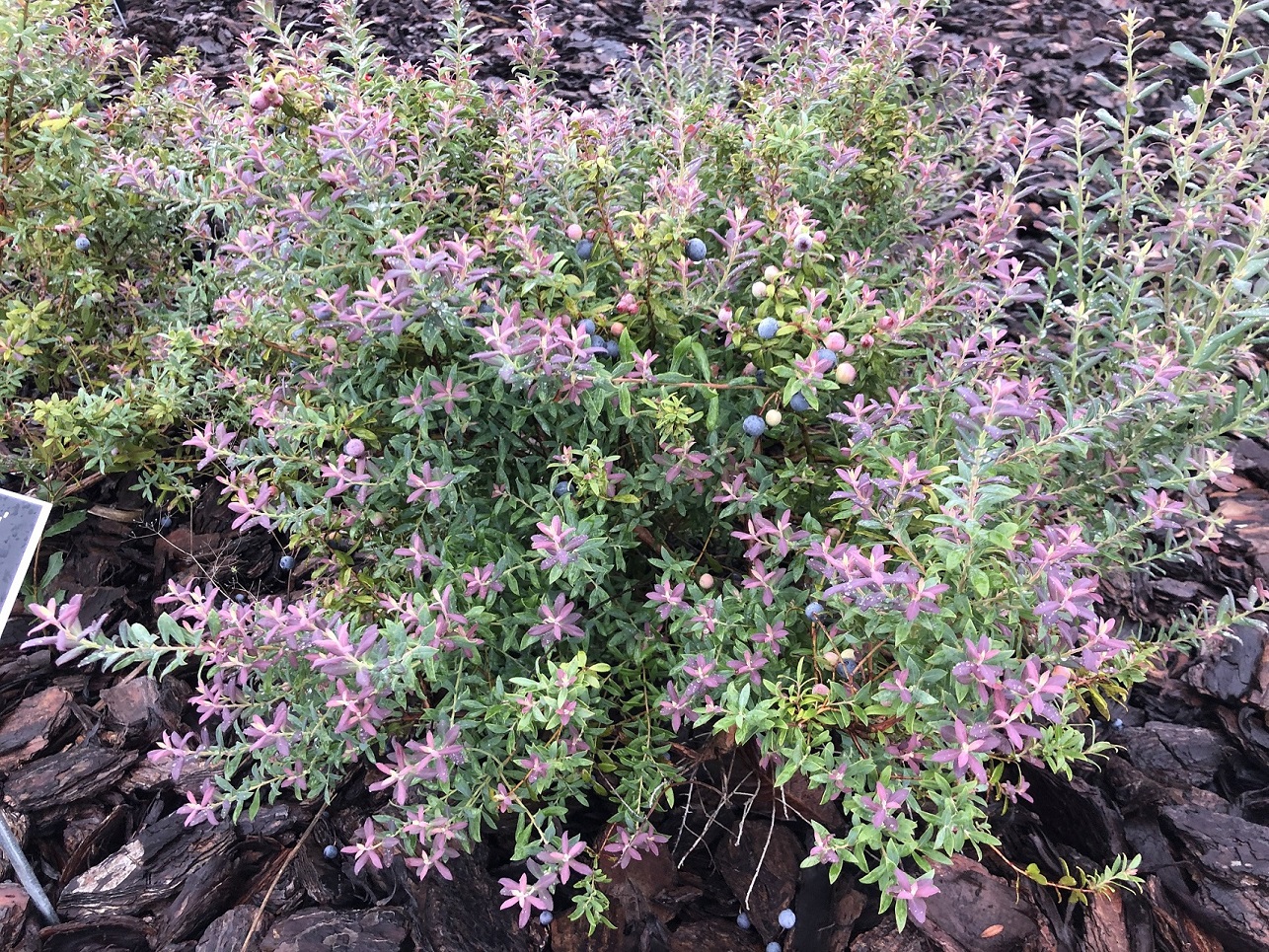
Darrow's Blueberry
Vaccinium darrowii
Native, semi-evergreen, perennial shrub. Produces small but sweet blueberries late spring/early summer. Leaves turn red in fall. New growth is purple. Pink and white bell-shaped flowers attract bees. Grows 2-3' tall and wide. Plant in full to partial sun, moist but well-drained and acidic soil.
-
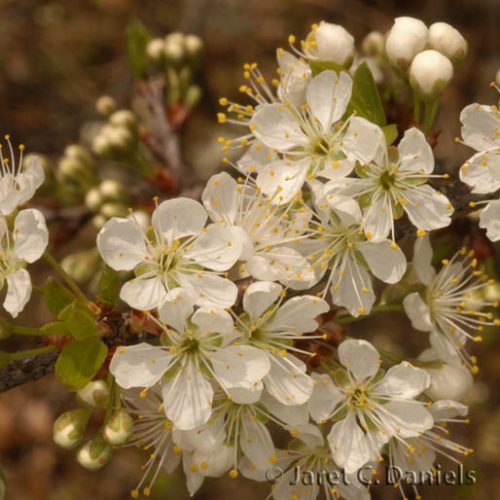
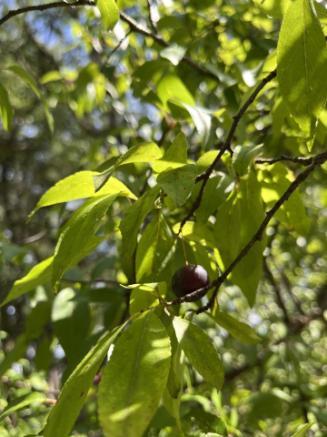
Flatwoods Plum
Prunus umbellata
Native, deciduous (will lose its leaves) tree or large shrub. Typically grows around 10' tall and wide but may grow up to 20'. White blooms in late winter / early spring are highly attractive to pollinators. Also called hog plum. Small edible plums ripen to dark purple or black in late summer or fall but can be quite astringent. Provide food for wildlife or good for jams, jellies, and pies. Full sun to partial shade, dry to moist, well-drained soils.
Top photo credit: Jaret Daniels, University of Florida
-
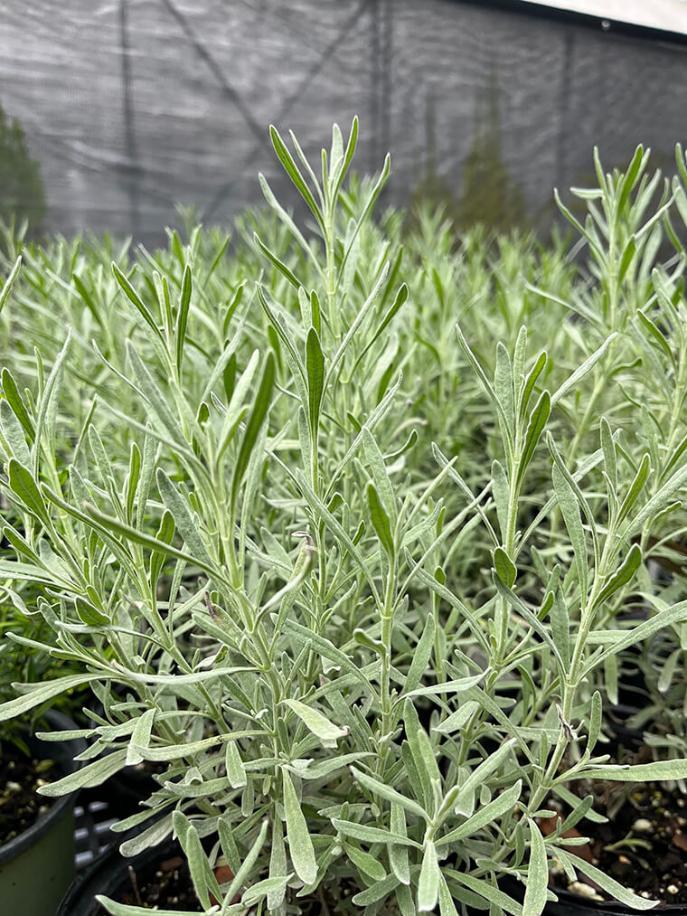
Lavender
Lavandula spp.
Evergreen, perennial herb, purple blooms attractive to pollinators. Many uses such as for cooking, satchets, and aromatherapy. Multiple varieties, most grow 2-3' tall and wide. Select heat-tolerant varieties or hybrids such as 'Phenomenal', 'Provence', or Spanish lavender. Full to partial sun, well-drained soils.
-
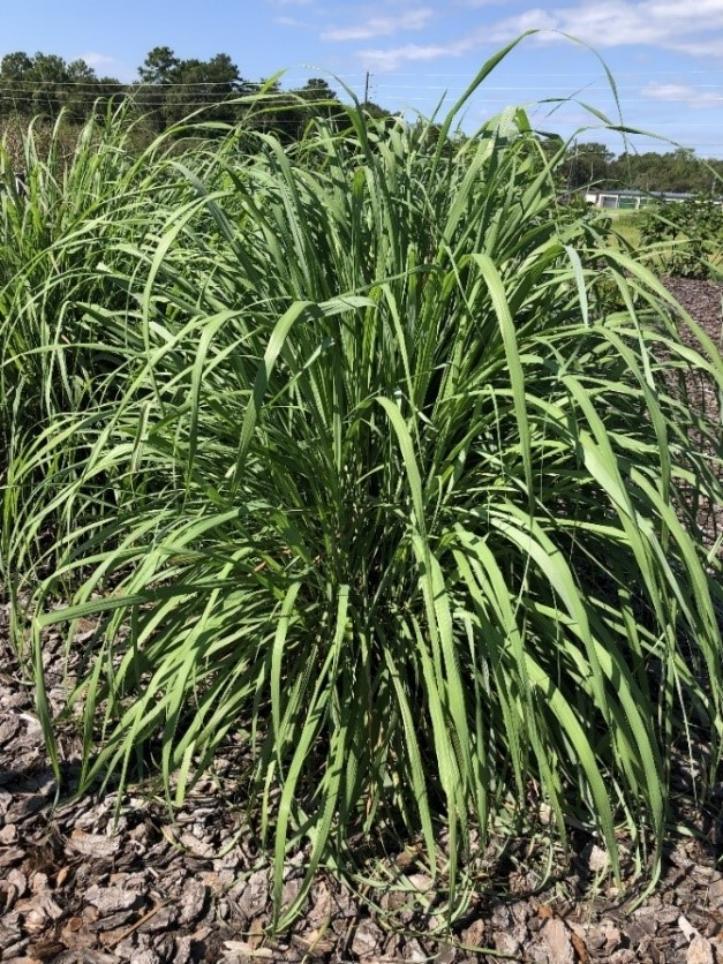
Lemongrass
Cymbopogon citratus
Perennial grass, will turn brown after freeze. Prune back dead growth in March. Can grow 6-8' tall (including seed head) x 4' wide. Deer resistant. Stalks used for dishes, tea, and essential oil. Full to partial sun in well-drained soils.
-
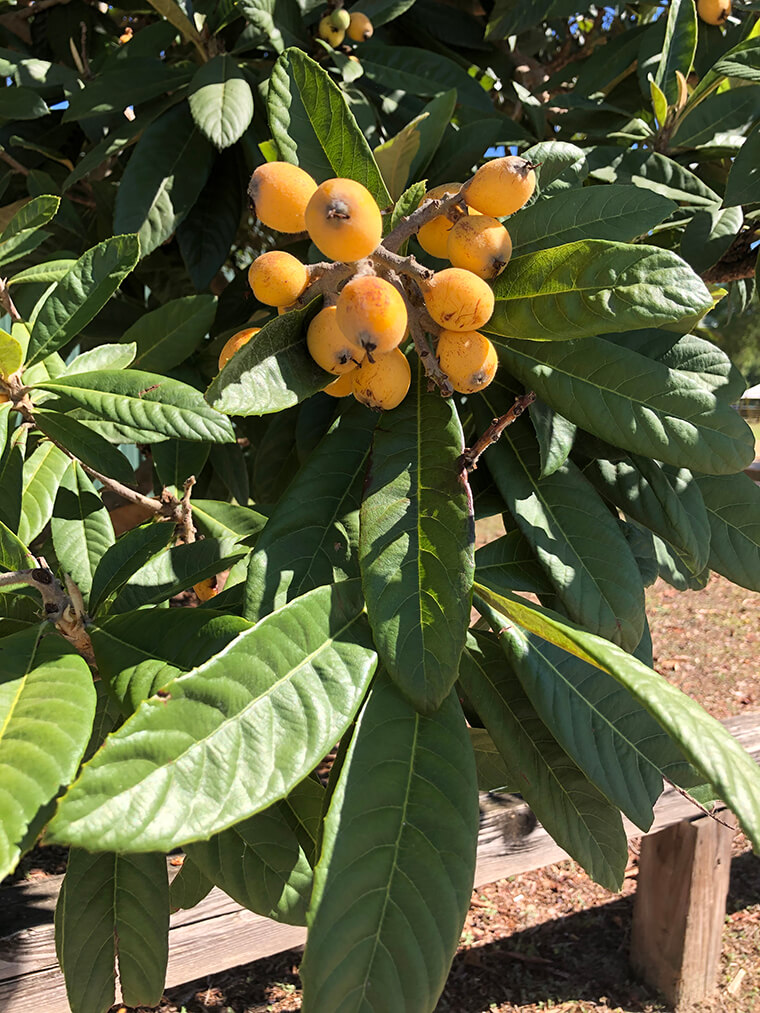
Loquat
Eriobotrya japonica
Also called Japanese plum, this evergreen tree is a lovely addition for larger foodscapes. Can grow 20-25' tall and wide and produces an abundance of orange, sweet, pear-like fruit in early spring. Avoid eating seeds. Clusters of fragrant white blooms in fall - winter are attractive to pollinators. May produce volunteers from fallen fruit. Plant in full to partial sun in well-drained soil. Many improved varieties on the market that may have larger and sweeter fruit.
-
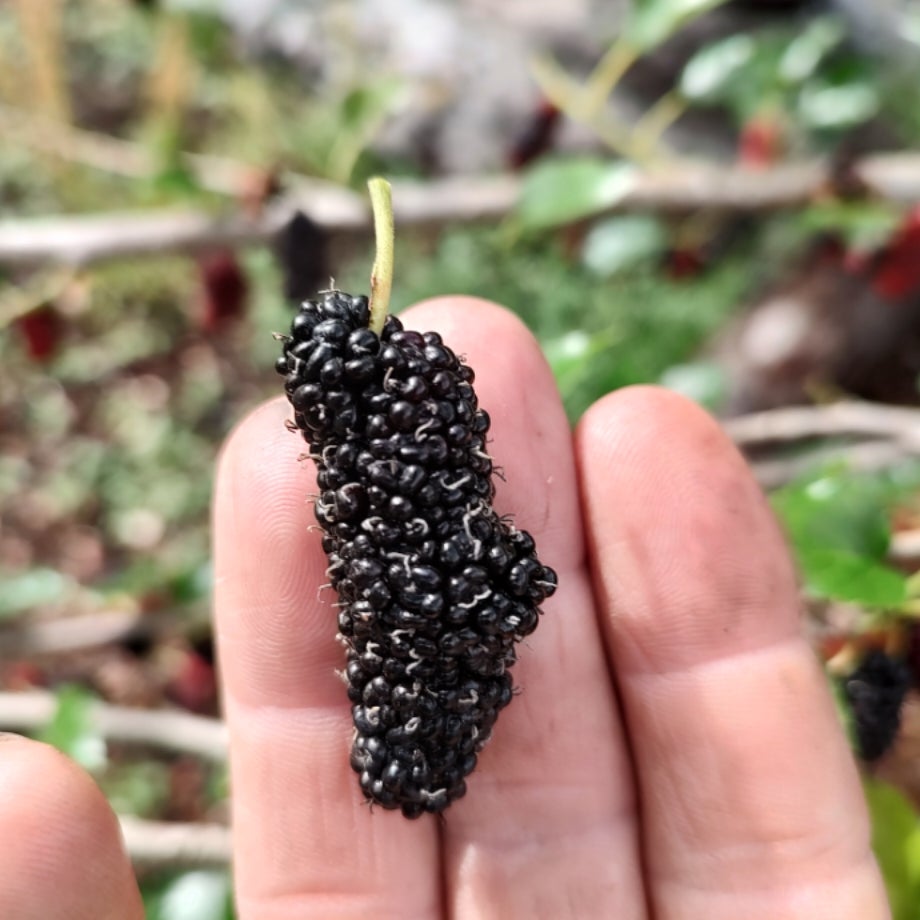
Mulberry 'Thai Dwarf'
Morus alba hybrid 'Thai Dwarf'
Deciduous tree typically grows 12-15' tall and wide but can be pruned to maintain smaller size and bushier growth. Large dark purple or black fruit in spring to summer are quite tasty and much larger than Dwarf Black Everbearing Mulberry fruit. Plant in full sun with well-drained soils. Fruit can stain surfaces so avoid planting by driveways or other hardscapes.
Photo credit: Scrubland Farmz Nursery
-
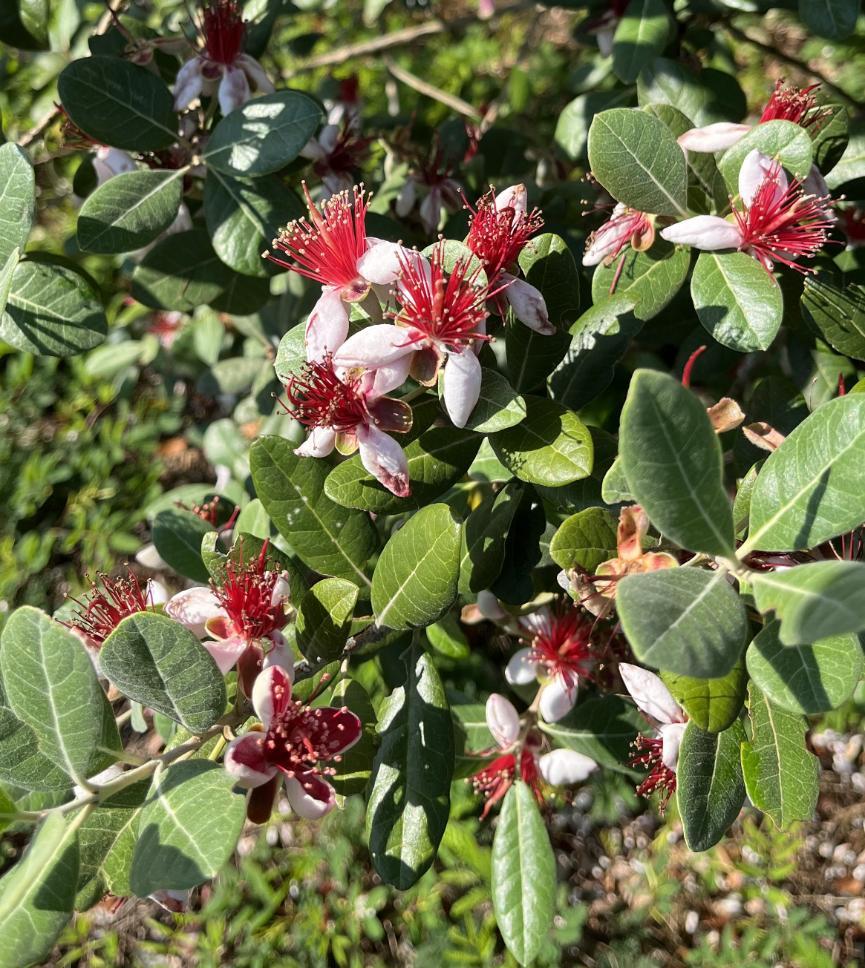
Pineapple Guava
Acca sellowiana
Also known as feijoa. Evergreen shrub or small tree grows ~15' tall x 15' wide. Can be pruned as a tree to reveal interesting bark. White and red blooms in spring have edible petals that taste similar to marshmallow. Edible egg-shaped fruit in summer. Some self-pollinating varieties exist, otherwise plant more than one for best fruit production. Full to partial sun.
-
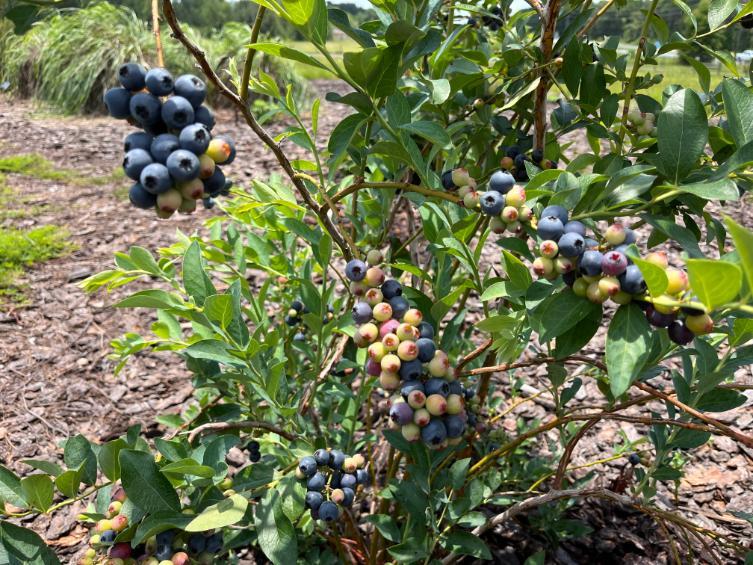
Rabbiteye Blueberry
Vaccinium ashei
Native cultivars, deciduous shrubs or small trees. Sizes vary widely by cultivar, but typically grow 5-10' tall and 5-6' wide, can be pruned after harvesting. Bell-shaped flowers attract bees. Large, sweet blueberries in spring to early summer. Prefer moist to average, well-drained, acidic soil in full to partial sun. Rabbitye blueberries need cross-pollination with 2 different rabbiteye varieties such as these 'Powderblue' and 'Tifblue' blueberry plants planted here.
-
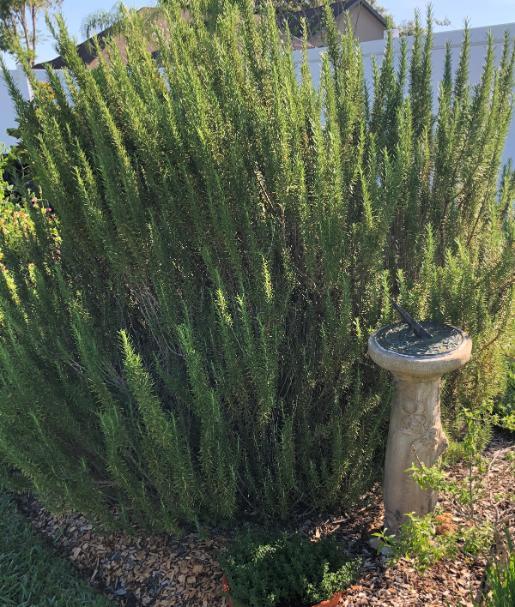
Rosemary
Salvia rosmarinus
Non-native, evergreen, shrub can grow to ~6' x 4' wide but can be pruned to size. White or lavender blooms are highly attractive to bees. Some cultivars like 'Tuscan Blue' are prolific bloomers. Culinary herb. Needs full sun and dry, well-drained soil. Rosemary does not tolerate wet soils.
-
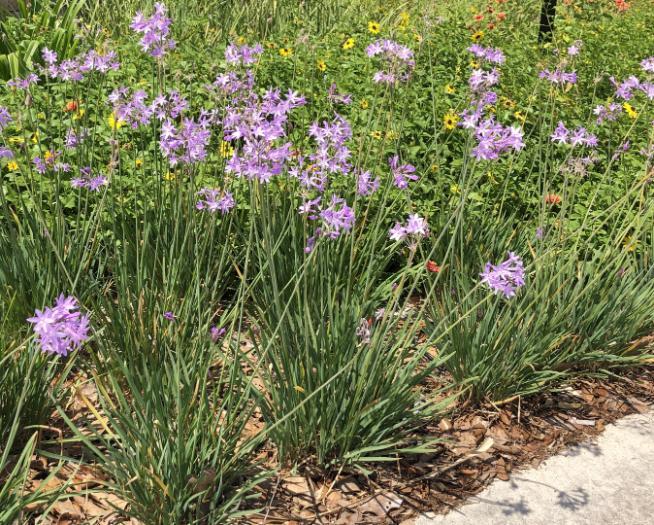
Society Garlic
Tulbaghia violacea
Evergreen, clumping, grass-like perennial with stalks of attractive purple blooms periodically spring to fall. All parts of the plants, including the flowers, are edible. Society garlic does emit a strong garlic scent. Tips may brown after hard freeze but most of the plant remains green year-round. Plant in full sun, grows 1-2' tall and wide.
-
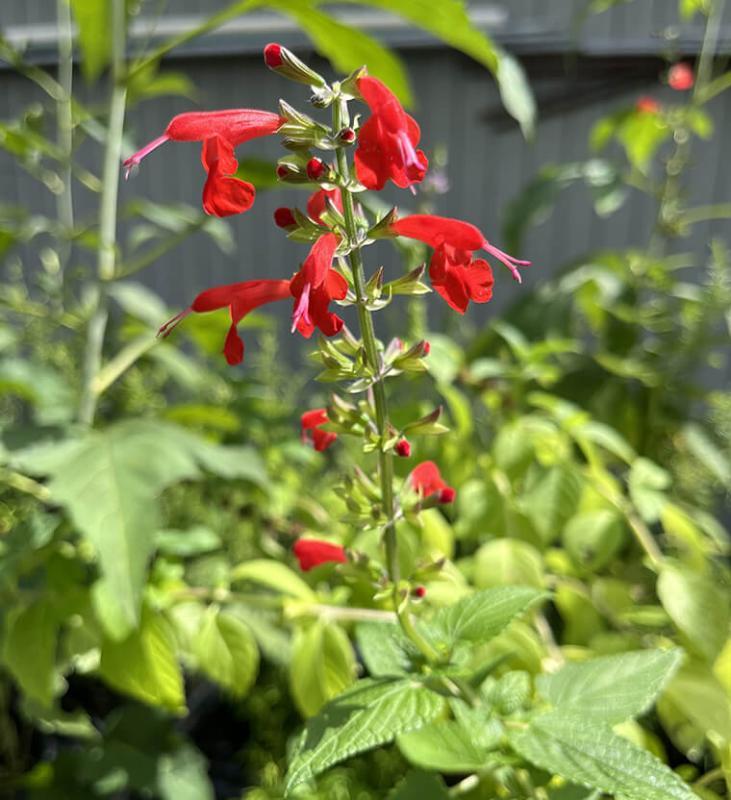
Tropical Sage
Salvia coccinea
Also known as scarlet sage or salvia, tropical sage is an ornamental, perennial, native wildflower that readily reseeds. It will burn back after a freeze, but returns from the roots and from seeds. Volunteer seedlings may bloom red, pink, or white. Highly attractive to hummingbirds and butterflies. Seeds also provide a source of food for birds. Plant in full to partial sun. Typically grows 2-5' tall and 1-2' wide.
-
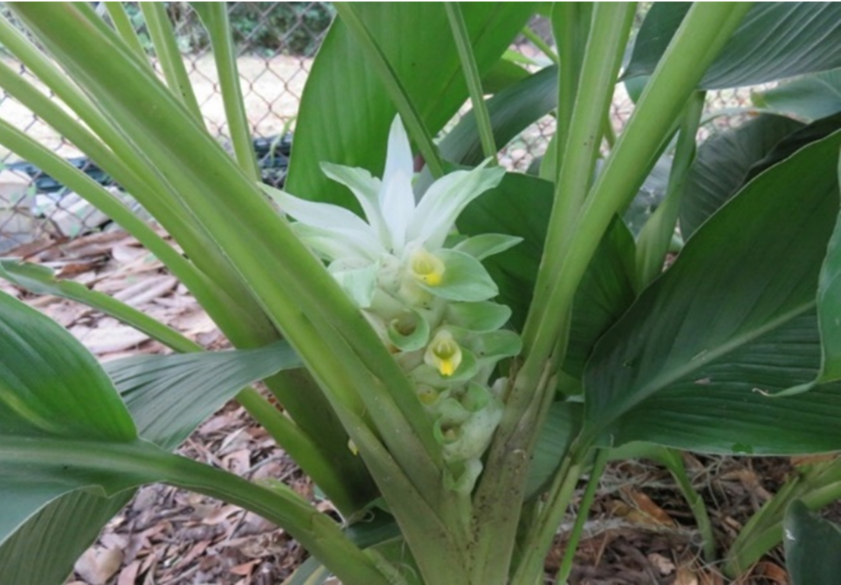
Turmeric
Curcuma longa
Perennial, deciduous, spice. Underground rhizomes have been used in dishes for thousands of years. Harvest when plant is dormant in winter. Full to partial shade in soil with high organic matter. Clumping, grows 3' tall.
-
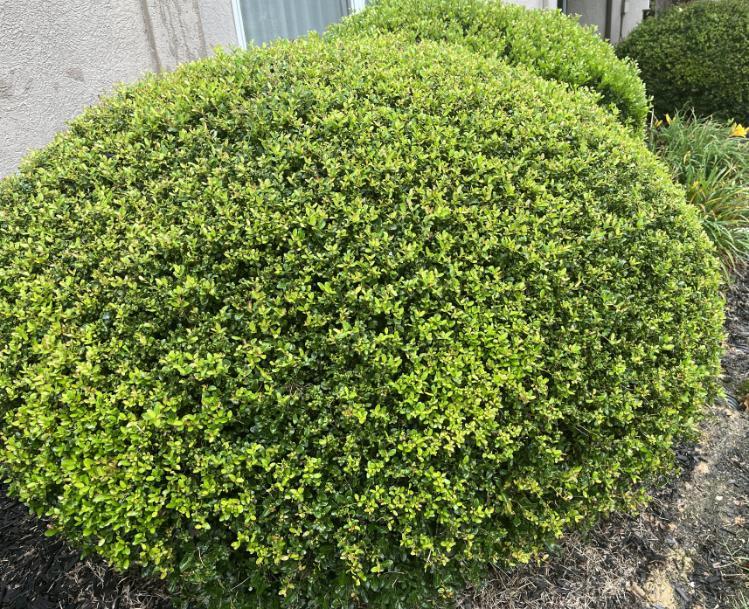
Dwarf Yaupon Holly 'Schillings'
Ilex vomitoria 'Schillings'
Native cultivar, evergreen shrub with caffeinated leaves used to make an excellent tea. 'Schillings' dwarf yaupon slowly grows 4-6' tall and wide with a naturally rounded shape. Bloom white but don't produce berries. Plant in full to partial sun in well-drained soil. Yaupon holly trees, including the weeping 'Pendula' yaupon holly, could be options for larger foodscapes that have the same caffeinated leaves. Female trees also produce red berries for birds.
The design of the McPherson Foodscape is divided into three beds: high budget, medium, and low. The biggest bed (~785ft²) on the north side is an example of a foodscape with a higher budget, the medium budget is in the middle (~225ft²), and the low budget bed is the smallest (~90ft²) on the south end. This is to provide you with a visualization of what might be possible on your own property. Prices are from 2025 and may vary widely. Pine bark mulch was delivered in bulk.
| High | Med | Low | |
|---|---|---|---|
| Mulch | $325 | $70 | $35 |
| Curbing | $900 | $500 | $350 |
| Plants | $500 | $250 | $150 |
| Total Cost ≈ |
$1725 | $820 | $535 |
The circular bed in the middle is 20' in diameter and has an estimated total budget of $975.
McPherson Final Design 9-22-25
Please take this survey to let us know what you thought of the garden and the website!
What is Marion County Extension?
This project was completed by the UF/IFAS Marion County Extension Service in partnership with Marion County Parks and Recreation, Administration, and the Board of County Commissioners. The UF/IFAS Marion County Extension Service provides free or low-cost educational services to the residents, farmers, and professionals in Marion County. We extend research-backed information from the University of Florida to help improve the social, economic, and environmental prosperity of our communities. From managing your lawn and vegetable garden, to identifying toxic weeds in your pastures, budgeting to buy your first home, improving your health through better diet, and empowering Marion County's youth to be strong future leaders, Extension is here to help you find solutions for your life.
A special thank you to the UF/IFAS Marion County Master Gardeners who helped us install this foodscape, to the Marion County Hospital District that partially funded this project, and to all of our other Community Partners: Scrubland Farmz, Andy's Signs, Leesburg Concrete & Curbing, Southern Aggregates, Tower Hill Nursery, and Salmon's Wholesale Nursery
-154x163.jpg)


Contact
Request a Master Gardener Speaker
Jeremy Rhoden
Horticulture Agent & Master Gardener Coordinator
jeremy.k.rhoden@ufl.edu
Ph: 352-671-8400
Amanda Marek
Florida-Friendly Landscaping Coordinator
E: mandab@ufl.edu
Ph: 352-671-8412